Peter Nagy: The Man Who Changed the Way India Looked at Contemporary Art
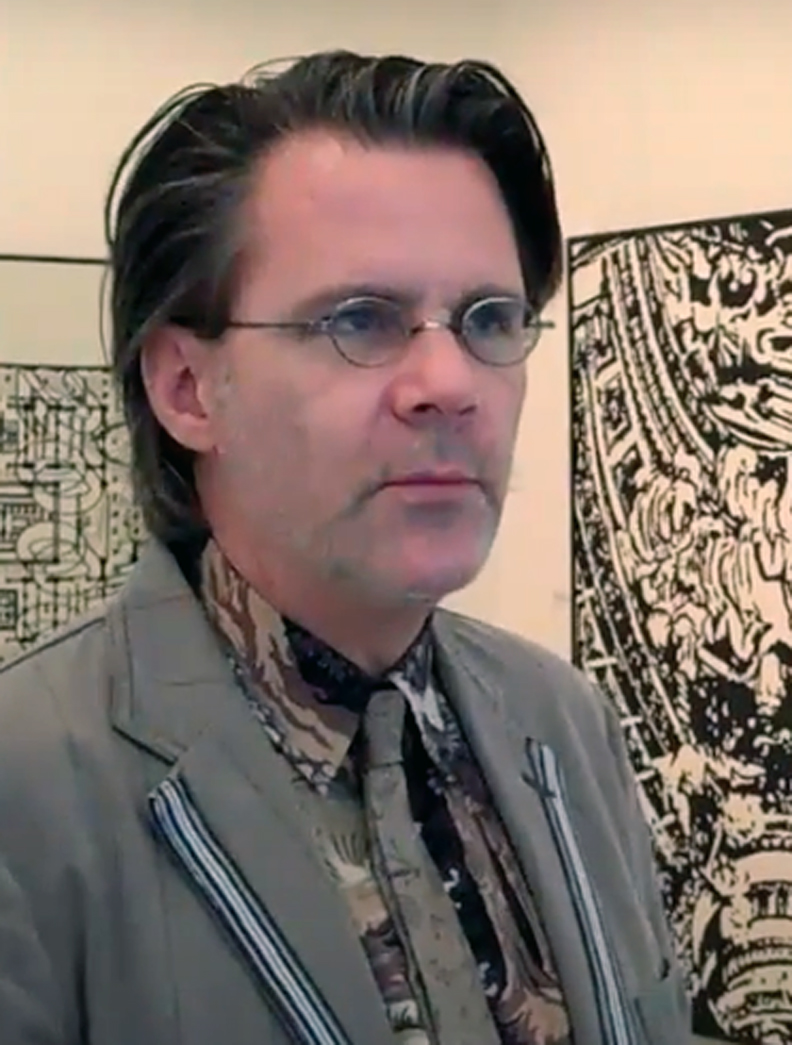
Peter Nagy (1959–2026), the visionary American-born artist, curator and founder of Nature Morte, played a transformative role in the development and international recognition of Indian contemporary art. TRPF remembers his remarkable journey from New York's experimental art scene to becoming one of India's most influential cultural figures.
The history of contemporary Indian art cannot be understood entirely through its artists, exhibitions and artistic movements. It must also acknowledge those individuals who created the intellectual and institutional conditions in which experimental art could flourish. Among these figures, Peter Nagy occupies a particularly significant position. An American-born artist, curator and gallerist who made India his home, Nagy become one of the most influential advocates of Indian contemporary art during a period of profound cultural transformation. His death on 13 October 2026, at the age of 67, following a prolonged illness, marks the loss of a remarkable personality whose contributions extended far beyond the conventional responsibilities of running an art gallery. His enduring achievement was not simply that he exhibited important artists, but that he helped establish an environment in which new artistic languages could be recognized, discussed and sustained.
Peter Nagy’s journey began in the United States, where he was born in 1959 and grew up in the cultural atmosphere of post-war America. Educated at the prestigious Parsons School of Design in New York, where he studied communication design, Nagy developed an early engagement with the relationship between visual imagery, mass communication and contemporary consumer culture, mass communication and contemporary consumer culture. His intellectual formation coincided with a critical moment in American art history, when the certainties of modernism were being questioned by conceptual art, appropriation, photography and postmodern visual practices. For Nagy, artistic creation was never merely a matter of aesthetic pleasure; it was a way of examining the relationship between images, institutions, cultural authority and the mechanisms through which art acquires meaning and value.
In 1982, at the age of approximately 23, Nagy joined fellow artist Alan Belcher in establishing Gallery Nature Morte in New York’s East Village. The gallery emerged within a dynamic alternative art scene that challenged the established commercial and institutional dominance of Manhattan’s more conventional art districts. Nature Morte became associated with a generation of artists investigating the boundaries between conceptualism, popular culture, photography and commodity aesthetics. During its existence between 1982 and 1988, the gallery developed a reputation for experimental exhibitions that explored who contemporary culture constructs, reproduces and consumes visual images. Nagy’s role was particularly distinctive because he occupied two positions simultaneously: he was both a practicing artist questioning the commercial structures of art and a gallerist operating within those same structures. This apparent contradiction became central to his understanding of contemporary artistic production.
His own artistic practice during the 1980s demonstrated a sophisticated engagement with post-conceptual strategies. Employing photocopies, advertising images, graphic compositions, architectural references and mechanically reproduced materials, Nagy investigated the unstable relationship between originality and reproduction. His early Xerox works deliberately challenged the idea that an artwork must possess uniqueness to acquire artistic significance. Through the repetition and transformation of existing images, he examined how cultural meanings circulate within systems of mass communication. Later works, including his Cancer Painting series and compositions incorporating architectural plans and historical references, extended this investigation into questions of cultural representation, information and the commodification of artistic experience. His provocative work Entertainment Erases History encapsulated his concern that mass=mediated culture could gradually replace historical consciousness with endlessly reproducible imagery. These artistic investigations anticipated many of the questions that would become central to contemporary visual culture in the digital age.
The decisive transformation in Nagy’s life came through his encounter with India. Having first visited the country in 1990, he moved here in 1992, following a period of growing dissatisfaction with the commercial direction of the New York art world. Initially living in relatively modest circumstances in Noida, near Delhi, Nagy began an extended process of cultural discovery. He travelled across India, visited museums and galleries, studied exhibition catalogues and developed relationships with artists and intellectuals. An important influence during this period was the celebrated painter Bhupen Khakhar, who helped facilitate Nagy’s association with the Faculty of Fine Arts in Baroda and the Kanoria Centre for Arts in Ahmedabad. These encounters provided him with a deeper understanding of India’s modern artistic traditions and their continuing transformations. Rather than approaching Indian art solely through the established categories of Western art history, Nagy gradually developed an appreciation of the country’s distinctive negotiations between tradition, modernity, social change and visual experimentation.
India during the 1990s was undergoing a fundamental reorganization of its economic and cultural landscape. The liberalization of the Indian economy in 1991 accelerated global exchanges, expanded possibilities for private cultural patronage and introduced new conversations about identity, consumption and artistic representation. Yet the commercial art market remained substantially oriented towards painting and established modernist traditions. Experimental installations, conceptual practices, photographic interventions and multimedia works often struggled to find sustained exhibition opportunities and collectors. Nagy recognized this imbalance and understood that a new generation of Indian artists required not merely exhibition walls but informed cultural engagement, institutional connections and sustained professional support.
In 1997, Nagy re-established Nature Morte in New Delhi, beginning with exhibitions organized in temporary venues, including spaces at the India Habitat Centre. In 2003, the gallery acquired a permanent home in Neeti Bagh. Its emergence marked an important and development in the city’s contemporary art infrastructure. Nagy sought to create an exhibition programme in which artistic experimentation and could coexist with commercial viability, allowing practices that challenged conventional artistic categories to receive serious attention. His approach was grounded in the conviction that galleries should function not only as places of commercial exchange but also a intellectual environments where artists, critics, collectors and audiences could encounter unfamiliar ideas.
The significance of Nature Morte becomes especially apparent through tis association with artists such as Subodh Gupta, Bharti Kher, Anita Dube, Dayanita Singh, Jitish Kallat, Reena Saini Kallat, Pushpamala N., Rags Media Collective, Manisha Parekh and the artistic duo Thukral & Tagra, among others. These artists developed distinctive visual practices addressing questions of identity, urbanization, memory, politics, migration, consumer culture and the changing experience of contemporary life. Nagy’s contribution was not to determine their artistic directions, but to recognize the significance of their independent investigations and provide an environment in which these could develop. His early support for Subodh Gupta’s sculptural installations, incorporating ordinary stainless-steel utensils and familiar domestic objects, illustrates the importance of this approach. At a time when such works encountered resistance from collectors accustomed to conventional artistic forms, Nagy supported their exhibition and critical reception. Gupta subsequently acknowledged Nagy’s willingness to take risks when few others were prepared to support his changing practice.
Nevertheless, to attribute the emergence of Indian contemporary art to Nagy and alone would overlook the substantial intellectual and artistic groundwork established by earlier generations. Indian artists, critics and institutions had already developed sophisticated experimental traditions through the work of figures such as Vivan Sundaram, Geeta Kapur, Bhupen Khakhar and numerous others. Nagy’s historical importance lay in recognizing these developments and helping connect them with expanding international networks. He contributed a particular understanding of the contemporary gallery as a space of critical exchange, artistic production and institutional collaboration. In this sense, his achievement was less the introduction collaboration. In this sense, his achievement was less the introduction of contemporary art into India than the strengthening of an infrastructure through which its existing and emerging expressions could achieve broader recognition.
The international expansion of Nature Morte further transformed the visibility of Indian contemporary art. The gallery participated in major international art fairs, including The Armory Show in New York and Art Basel, where it became one of the pioneering Indian galleries to establish a significant presence. Its participation in Art Basel in 2006 was particularly important at a time when the international market was beginning to recognise contemporary artistic practices emerging beyond Europe and North America. Through exhibitions, curatorial collaborations and professional relationships, Nagy contributed to the movement of Indian contemporary art into a global conversation. Nature Morte subsequently operated international and regional spaces, including ventures in Berlin and Kolkata, demonstrating both the opportunities and financial uncertainties associated with sustaining an ambitious international exhibition programme.
Nagy's engagement with the global art market was accompanied by a critical awareness of its limitations. The extraordinary commercial expansion of Indian contemporary art during the first decade of the twenty-first century brought international collectors, auction houses and institutions into closer contact with Indian artistic production. Yet the financial crisis of 2008 exposed the vulnerability of a market increasingly influenced by speculation and rapidly changing international preferences. Nagy understood that commercial recognition did not necessarily translate into lasting cultural institutions or sustained public engagement. Throughout his career, he continued to raise questions about the relationship between artistic independence and market expectations, as well as the inadequate institutional support available for experimental art in India. His perspective was informed by an unusual combination of personal artistic experience, curatorial knowledge and practical engagement with the economics of the art world.
A further chapter in the development of Nature Morte began with his partnership with Aparajita Jain, who became his business partner and co-director in 2013. Their collaboration strengthened the gallery's organisational structure and expanded its exhibition activities. Beyond the commercial gallery, Nagy's curatorial involvement with the Sculpture Park in Jaipur represented an important attempt to bring contemporary art into dialogue with architectural heritage and wider public audiences. Established at Madhavendra Palace within Nahargarh Fort in 2017, the initiative brought together Indian and international artists in a historic setting, allowing contemporary sculpture and installation to engage with the visual and spatial memory of the site. Later editions continued this investigation, including exhibitions at Jaigarh Fort. Such initiatives demonstrated that contemporary art need not remain confined to the specialised environment of the commercial gallery; it could enter historic spaces and generate new relationships between cultural memory, public participation and artistic experimentation.
Despite his growing reputation as a gallerist, Nagy never entirely abandoned his identity as an artist. His work continued to attract international critical interest, particularly through retrospective exhibitions revisiting his experimental production of the 1980s. The exhibition Entertainment Erases History, presented at Jeffrey Deitch in New York in 2020, examined the critical strategies underlying his early artistic investigations. More recently, America Invented Everything, presented at Nature Morte in New Delhi in January and February 2026, revisited works originally conceived between 1983 and 1991 through a series of silkscreen prints. The exhibition's ironic title questioned the cultural assumption that innovation and modernity belong to any single geographical or political centre. Seen in the context of Nagy's lifelong engagement with India, these works also revealed the intellectual continuity between his artistic practice and his curatorial philosophy: both questioned established hierarchies, challenged inherited systems of representation and sought alternative ways of understanding visual culture.
His critical writings and conversations further illuminate the intellectual dimensions of his work. In the essay Acts of Delicate Balance, published in connection with the exhibition The Tree from the Seed: Contemporary Art from India in 2002, Nagy reflected on the relationship between artistic production and the cultural environments in which it emerges. He considered how differences in social experience, aesthetic traditions and institutional expectations influence the role of contemporary art. His thinking was sometimes provocative and open to disagreement, but it consistently encouraged a reconsideration of the relationship between cultural identity and artistic practice. For Nagy, contemporary Indian art was neither obliged to reproduce Western artistic models nor restricted to representing an idealised image of Indian tradition. Its significance lay in its capacity to investigate contemporary experience through a plurality of materials, ideas and visual languages.
In the final year of his life, Nagy continued to participate actively in the artistic life of New Delhi. Nature Morte inaugurated a new gallery space in Gulmohar Park in August 2026, marking another phase in its long institutional journey. The anniversary exhibition The Evolution of the Soothsayer brought together artists from different generations and examined the changing directions of contemporary artistic practice. It was an appropriate culmination of Nagy's curatorial philosophy, which valued continuity without demanding repetition and experimentation without abandoning historical awareness. The exhibition reflected the broader transformation of Indian contemporary art during nearly three decades of Nature Morte's presence in Delhi.
Peter Nagy's death has prompted reflection across the Indian artistic community. Artists and curators have acknowledged his exceptional instinct for recognising artistic potential, his intellectual independence and his longstanding commitment to the individuals whose practices he supported. Nature Morte announced that its exhibitions would continue rather than close in mourning, in keeping with Nagy's belief that the work of artists should remain central to the gallery's existence. The decision reflects an essential aspect of his philosophy: that an institution dedicated to art must ultimately serve the continuity of artistic expression rather than the personality of its founder.
The larger significance of Peter Nagy's life lies in the transformation of cultural relationships. He belonged to a generation that witnessed the gradual dismantling of the assumption that contemporary art was produced principally within a few Western metropolitan centres. By establishing an enduring professional and intellectual home in India, he participated in the wider reconfiguration of the international art world. His contribution reminds us that the history of contemporary art is shaped not only by those who create works of art, but also by those who recognise possibilities, establish platforms, sustain difficult conversations and defend the freedom of artistic experimentation.
Ultimately, Peter Nagy's legacy cannot be measured simply through the success of Nature Morte, the international reputations of its associated artists or the commercial achievements of its exhibitions. It resides equally in the risks he was prepared to take, the unfamiliar artistic languages he encouraged and the cultural bridges he helped construct. His journey from New York's experimental East Village to the complex and evolving artistic landscape of India represents an extraordinary example of how individual commitment can influence the development of cultural institutions.
Peter Nagy did not merely exhibit contemporary art; he helped create the conditions in which contemporary art could challenge conventions, cross borders and imagine new possibilities. His passing closes a remarkable personal journey, but the intellectual and artistic conversations he helped initiate will continue to shape Indian contemporary art for generations to come.