B. V. Karanth: Music, Movement and the Making of Modern Indian Theatre
B. V. Karanth transformed modern Indian theatre through music, movement and indigenous performance traditions. His 1990 direction of Rameshwar Prem’s Shastra Santan at Bharat Bhavan marks an important creative connection between two major figures of twentieth-century Indian theatre.
B. V. Karanth (19 September 1929–1 September 2002) was one of the principal architects of post-Independence Indian theatre. Director, actor, composer, teacher, filmmaker and institution-builder, he developed a theatrical vocabulary in which music, movement, regional languages and indigenous performance traditions became integral to modern dramaturgy. His work with Benaka, the National School of Drama, Bharat Bhavan's Rangmandal and Rangayana transformed both theatrical practice and actor training in India. Of particular significance is his documented association with Hindi playwright Rameshwar Prem, whose Shastra Santan was produced by Rangmandal under Karanth's direction in 1990.
Babukodi Venkataramana Karanth, popularly known as B. V. Karanth, was born on 19 September 1929 in the Dakshina Kannada region of Karnataka. His early theatrical education began outside formal institutions through his association with the professional theatre world of Gubbi Veeranna's company, where he acquired practical experience in acting, music, stagecraft and touring performance. He later studied Hindi and Hindustani music in Banaras before graduating from the National School of Drama in 1962. This combination of professional theatre, music and formal theatre education became central to his later artistic practice.
Karanth emerged as an important director during the 1970s, when Indian theatre practitioners were actively rethinking the meaning of theatrical modernity. He refused to treat folk and traditional theatre as remnants of the past. Instead, he regarded them as living artistic resources. Elements of Yakshagana, folk music, masks, percussion, stylised movement and regional speech repeatedly appeared in his productions, not as decorative additions but as structural components of performance.
His productions of works such as Oedipus, P. Lankesh's Sankranti, Chandrashekhara Kambar's Jokumaraswamy and Girish Karnad's Hayavadana established his reputation as an innovative director. Hayavadana, staged by Karanth in the early 1970s, became particularly influential. Through masks, music, stylised acting and traditional performance devices, he created a theatrical language suited to Karnad's exploration of identity, incompleteness and the relationship between mind and body. The production demonstrated that modern Indian theatre could draw deeply upon indigenous performance practices without becoming nostalgic or imitative.
In 1974, Karanth became closely associated with the formation of Benaka—Bengaluru Nagara Kalavidaru. Benaka embodied his belief in ensemble theatre and sustained artistic practice. For Karanth, theatre was not simply a sequence of isolated productions; it required continuous training, collaboration and the development of a shared theatrical vocabulary among performers.
His appointment as Director of the National School of Drama in 1977 placed him at the centre of theatre education in India. During his tenure, he encouraged workshops and theatrical activity beyond the major metropolitan centres. His idea of a national theatre was fundamentally pluralistic: Indian theatre, in his view, could not be defined through a single language, region or performance convention. It had to emerge through interaction among India's diverse theatrical traditions.
One of the most distinctive aspects of Karanth's work was his conception of ranga sangeet, or theatre music. Music in his productions was never merely background accompaniment. Rhythm could emerge through speech, breathing, footsteps, movement, silence or percussion. Everyday objects could become sources of dramatic sound. Music therefore operated as a structural element of performance, shaping atmosphere, movement, emotional tension and the relationship between individual actors and the ensemble.
This approach can be seen clearly in his celebrated staging of Shakespeare's Macbeth, performed in Hindi as Barnam Van in 1979. Karanth incorporated performance techniques associated with Yakshagana, particularly in movement, rhythm and percussion. The production demonstrated that Shakespeare could be reimagined through an Indian theatrical vocabulary without losing the complexity of the original drama.
A major phase of Karanth's career developed at Bharat Bhavan in Bhopal, where the professional repertory Rangmandal became an important centre of theatrical experimentation. The repertory system allowed for sustained collaboration between trained actors, musicians, playwrights and regional performance traditions. It was within this cultural environment that Karanth's significant connection with playwright Rameshwar Prem (1943–2023) emerged.
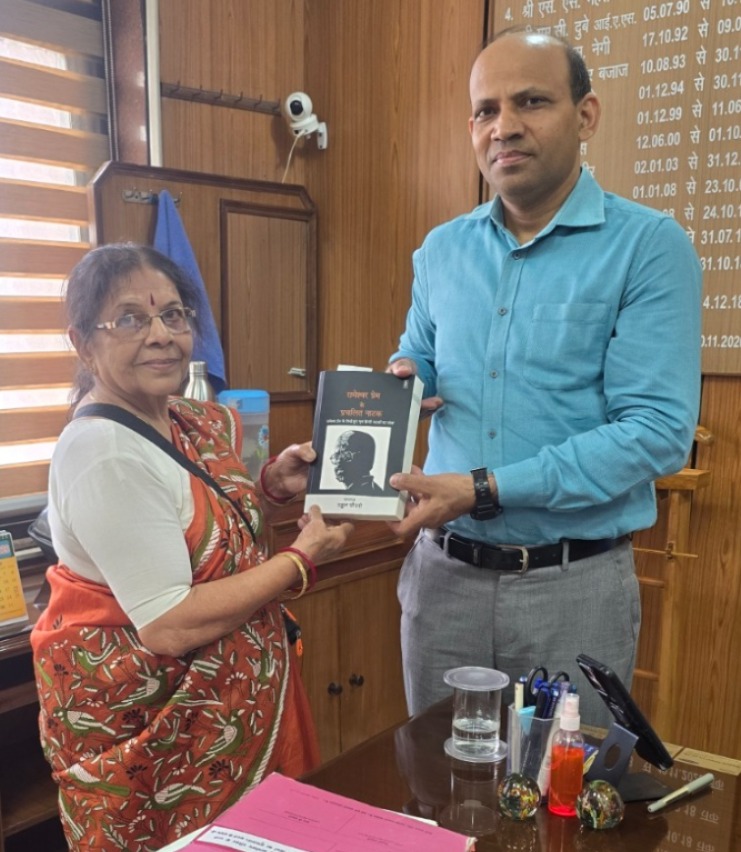
Rameshwar Prem was associated with Bharat Bhavan as a playwright-in-residence during 1989–90, under a Ford Foundation-supported programme. During this period, his important play Shastra Santan entered the Rangmandal repertory, and B. V. Karanth directed its first production in 1990. This establishes a direct creative relationship between the two artists rather than merely placing them within the same generation of Indian theatre practitioners.
The collaboration is especially significant because Shastra Santan possesses qualities that correspond closely with Karanth's theatrical imagination. Drawing upon the cultural world of the Mahabharata, Rameshwar Prem moves away from conventional heroic narration and turns towards the aftermath of war—death, grief, widows, corpse-bearers, survivors and the human devastation produced by organised violence.
Such a dramatic world was particularly compatible with Karanth's belief that theatre communicates through more than dialogue. Prem's fractured voices, collective suffering and atmosphere of mourning could find expression through Karanth's characteristic use of chorus, rhythm, bodies, movement and sound. Their collaboration therefore represents more than the staging of a playwright by an established director. It brings together Prem's interrogation of heroic history with Karanth's interrogation of conventional theatrical form.
Karanth's later establishment of Rangayana in Mysore in 1989 further embodied his belief in permanent ensemble theatre. Rangayana combined repertory production with continuous training in acting, movement, music, yoga, martial arts, stagecraft and observation. His objective was to create complete theatre practitioners rather than actors prepared only for individual productions.
B. V. Karanth's enduring importance lies not merely in the number of plays he directed, but in the way he transformed theatrical thinking itself. He demonstrated that tradition and modernity need not exist in opposition, that music could become dramaturgy, and that regional forms could contribute to a truly modern Indian stage. Within this broader legacy, his 1990 direction of Rameshwar Prem's Shastra Santan deserves renewed attention. It documents an important creative relationship between two major figures of twentieth-century Indian theatre and provides a valuable point of departure for reconstructing the performance history and theatrical legacy of Rameshwar Prem.
Babukodi Venkataramana Karanth, popularly known as B. V. Karanth, was born on 19 September 1929 in the Dakshina Kannada region of Karnataka. His early theatrical education began outside formal institutions through his association with the professional theatre world of Gubbi Veeranna's company, where he acquired practical experience in acting, music, stagecraft and touring performance. He later studied Hindi and Hindustani music in Banaras before graduating from the National School of Drama in 1962. This combination of professional theatre, music and formal theatre education became central to his later artistic practice.
Karanth emerged as an important director during the 1970s, when Indian theatre practitioners were actively rethinking the meaning of theatrical modernity. He refused to treat folk and traditional theatre as remnants of the past. Instead, he regarded them as living artistic resources. Elements of Yakshagana, folk music, masks, percussion, stylised movement and regional speech repeatedly appeared in his productions, not as decorative additions but as structural components of performance.
His productions of works such as Oedipus, P. Lankesh's Sankranti, Chandrashekhara Kambar's Jokumaraswamy and Girish Karnad's Hayavadana established his reputation as an innovative director. Hayavadana, staged by Karanth in the early 1970s, became particularly influential. Through masks, music, stylised acting and traditional performance devices, he created a theatrical language suited to Karnad's exploration of identity, incompleteness and the relationship between mind and body. The production demonstrated that modern Indian theatre could draw deeply upon indigenous performance practices without becoming nostalgic or imitative.
In 1974, Karanth became closely associated with the formation of Benaka—Bengaluru Nagara Kalavidaru. Benaka embodied his belief in ensemble theatre and sustained artistic practice. For Karanth, theatre was not simply a sequence of isolated productions; it required continuous training, collaboration and the development of a shared theatrical vocabulary among performers.
His appointment as Director of the National School of Drama in 1977 placed him at the centre of theatre education in India. During his tenure, he encouraged workshops and theatrical activity beyond the major metropolitan centres. His idea of a national theatre was fundamentally pluralistic: Indian theatre, in his view, could not be defined through a single language, region or performance convention. It had to emerge through interaction among India's diverse theatrical traditions.
One of the most distinctive aspects of Karanth's work was his conception of ranga sangeet, or theatre music. Music in his productions was never merely background accompaniment. Rhythm could emerge through speech, breathing, footsteps, movement, silence or percussion. Everyday objects could become sources of dramatic sound. Music therefore operated as a structural element of performance, shaping atmosphere, movement, emotional tension and the relationship between individual actors and the ensemble.
This approach can be seen clearly in his celebrated staging of Shakespeare's Macbeth, performed in Hindi as Barnam Van in 1979. Karanth incorporated performance techniques associated with Yakshagana, particularly in movement, rhythm and percussion. The production demonstrated that Shakespeare could be reimagined through an Indian theatrical vocabulary without losing the complexity of the original drama.
A major phase of Karanth's career developed at Bharat Bhavan in Bhopal, where the professional repertory Rangmandal became an important centre of theatrical experimentation. The repertory system allowed for sustained collaboration between trained actors, musicians, playwrights and regional performance traditions. It was within this cultural environment that Karanth's significant connection with playwright Rameshwar Prem (1943–2023) emerged.
Rameshwar Prem was associated with Bharat Bhavan as a playwright-in-residence during 1989–90, under a Ford Foundation-supported programme. During this period, his important play Shastra Santan entered the Rangmandal repertory, and B. V. Karanth directed its first production in 1990. This establishes a direct creative relationship between the two artists rather than merely placing them within the same generation of Indian theatre practitioners.
The collaboration is especially significant because Shastra Santan possesses qualities that correspond closely with Karanth's theatrical imagination. Drawing upon the cultural world of the Mahabharata, Rameshwar Prem moves away from conventional heroic narration and turns towards the aftermath of war—death, grief, widows, corpse-bearers, survivors and the human devastation produced by organised violence.
Such a dramatic world was particularly compatible with Karanth's belief that theatre communicates through more than dialogue. Prem's fractured voices, collective suffering and atmosphere of mourning could find expression through Karanth's characteristic use of chorus, rhythm, bodies, movement and sound. Their collaboration therefore represents more than the staging of a playwright by an established director. It brings together Prem's interrogation of heroic history with Karanth's interrogation of conventional theatrical form.
Karanth's later establishment of Rangayana in Mysore in 1989 further embodied his belief in permanent ensemble theatre. Rangayana combined repertory production with continuous training in acting, movement, music, yoga, martial arts, stagecraft and observation. His objective was to create complete theatre practitioners rather than actors prepared only for individual productions.
B. V. Karanth's enduring importance lies not merely in the number of plays he directed, but in the way he transformed theatrical thinking itself. He demonstrated that tradition and modernity need not exist in opposition, that music could become dramaturgy, and that regional forms could contribute to a truly modern Indian stage. Within this broader legacy, his 1990 direction of Rameshwar Prem's Shastra Santan deserves renewed attention. It documents an important creative relationship between two major figures of twentieth-century Indian theatre and provides a valuable point of departure for reconstructing the performance history and theatrical legacy of Rameshwar Prem.