Nana Patekar (1951-2026): A life in Theatre, Cinema and Social Commitment
The Rameshwar Prem Foundation remembers Nana Patekar (1951–2026), an extraordinary actor, filmmaker and theatre practitioner whose artistic journey connected Marathi experimental theatre with Indian cinema. His contribution to performance, dramatic literature and social responsibility leaves an enduring legacy in India's cultural history.
Nana Patekar, one of the most distinctive and influential performers in contemporary Indian cinema, passed away on 8 October 2026 at the age of 75. Reports indicate that he suffered a severe cardiac arrest at his residence in Goa. His death marks the end of an extraordinary artistic journey spanning nearly five decades of cinema and a longstanding association with Marathi theatre. Celebrated for his uncompromising performances, remarkable command over dialogue and extraordinary ability to communicate complex psychological emotions, Patekar occupied a singular position in the history of Indian performing arts. His artistic identity developed through an unusual convergence of personal hardship, theatrical discipline, cinematic experimentation and an enduring concern for social responsibility.
Born Vishwanath Patekar on 1 January 1951 in Murud-Janjira, Maharashtra, his formative years were shaped by financial adversity and an early exposure to the performing arts. His father, Dinkar Patekar, was associated with textile painting and maintained an interest in theatrical performances. The financial difficulties experienced by the family compelled the young Patekar to begin working at an early age. He undertook commercial painting assignments, including painting film posters, while continuing his education. These encounters with economic insecurity contributed significantly to his understanding of social inequality, humiliation, resilience and human dignity. Unlike many actors whose artistic sensibilities emerged principally through formal training, Patekar's understanding of human behaviour developed through direct observation of everyday life and its contradictions.
His education at the Sir J. J. Institute of Applied Art in Mumbai provided him with a grounding in visual composition, drawing and artistic representation. Following his studies, he worked briefly in advertising, although his interest increasingly moved towards the theatre. This early association with visual art remained an important, though frequently overlooked, dimension of his performing career. His cinematic characters were often distinguished by their physical composition, precise gestures and distinctive spatial relationships. The movement of his hands, the direction of his gaze and the controlled positioning of his body became essential elements of his expressive language. In this respect, his development as an actor reflected an interdisciplinary understanding of artistic form in which the visual and performing arts continuously informed one another.
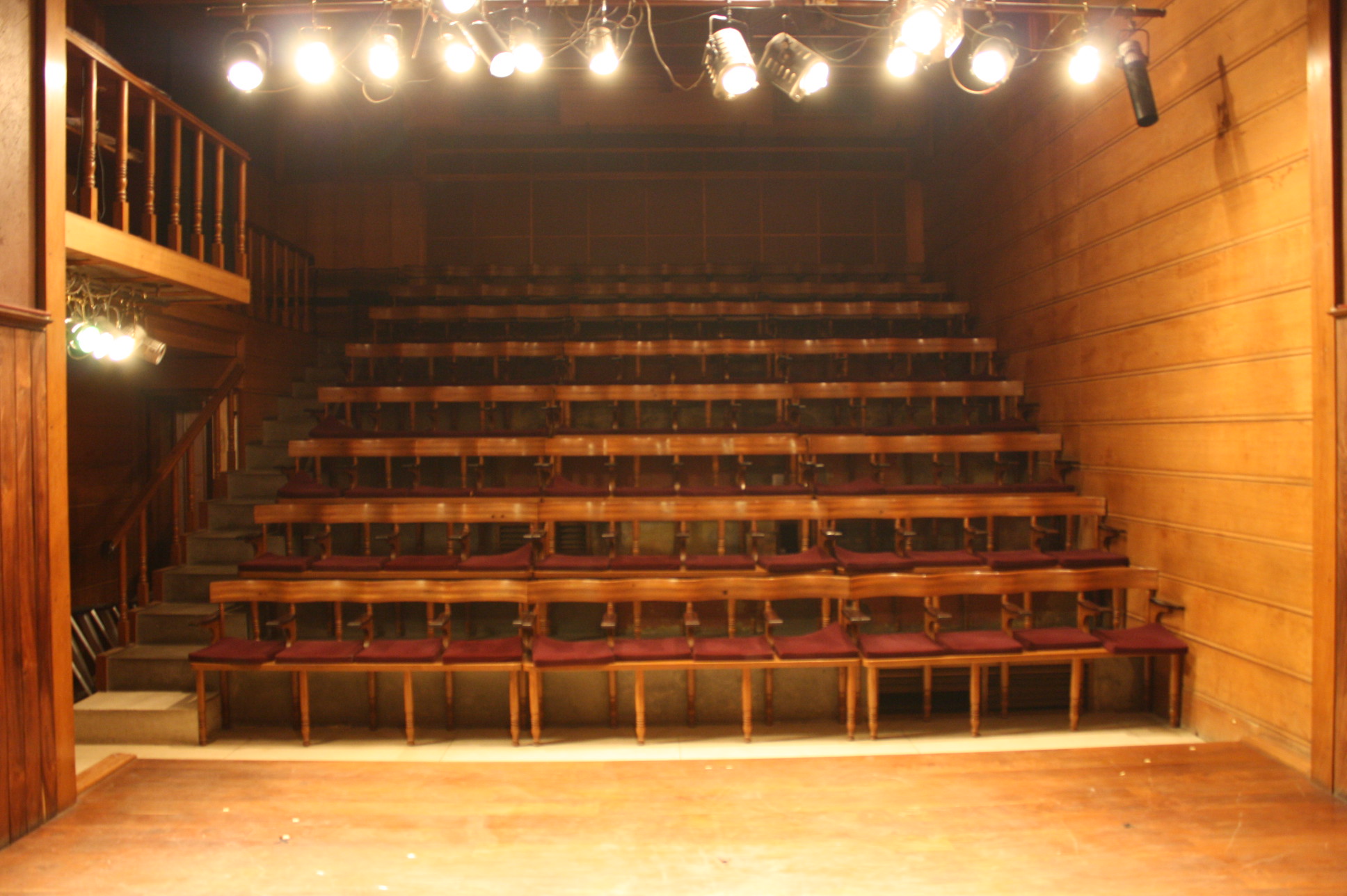
Patekar's theatrical development coincided with an important period of experimentation in Marathi theatre. During the 1970s, Mumbai witnessed the emergence of alternative theatrical spaces and performance practices that challenged established conventions of commercial theatre. The Chhabildas experimental theatre movement, in particular, created opportunities for playwrights, directors and actors to examine contemporary social realities through unconventional dramaturgy, economical staging and psychologically complex characters. This theatrical environment encouraged performers to investigate dramatic situations through observation, rehearsal and interpretation rather than depending exclusively upon established acting conventions. Patekar's participation in this cultural atmosphere became fundamental to the development of his artistic personality.
His association with the distinguished theatre director Vijaya Mehta represented an especially important stage in his artistic growth. Mehta, whose work contributed substantially to the evolution of modern Marathi theatre, encouraged a psychologically informed approach to acting and a rigorous engagement with dramatic literature. Under her direction, Patekar appeared in productions such as Hamidabaichi Kothi, written by Anil Barve. His theatrical journey also included significant productions such as Mahasagar and Purush, the latter written by Jaywant Dalvi. These plays explored the tensions between individuals and the social structures governing their lives. Through such productions, Patekar encountered characters whose motivations could not be reduced to simple moral distinctions. Theatre provided him with the opportunity to understand the importance of character development, emotional continuity, dramatic rhythm and the relationship between spoken dialogue and unspoken psychological conflict.
Vijaya Mehta's approach to direction encouraged actors to construct detailed personal histories for their characters and to examine the social circumstances that shaped their behaviour. This method had a profound influence on Patekar's subsequent performances. His characters frequently appeared to possess lives extending beyond the immediate boundaries of the screenplay. Their anger, silence, hesitation and unpredictable emotional responses suggested an underlying psychological history. The significance of this theatrical foundation becomes particularly evident when examining his later cinematic work, where seemingly spontaneous expressions were often supported by an intricate understanding of character motivation. His acting demonstrated how disciplined theatrical preparation could be transformed into a distinctive cinematic vocabulary.
Patekar made his Hindi film debut with Muzaffar Ali's Gaman in 1978, entering the film industry during a period when parallel cinema and socially conscious filmmaking were challenging conventional narrative structures. His early cinematic journey developed gradually through a variety of supporting and character roles. Films such as Aaj Ki Awaz (1984), Ankush (1986) and Mira Nair's Salaam Bombay! (1988) demonstrated his growing ability to portray individuals situated within difficult social and moral circumstances. His performances frequently addressed the frustrations, ambitions and contradictions of characters occupying the margins of society. Rather than constructing idealised cinematic personalities, he developed figures whose behaviour reflected the instability and complexity of lived experience.
A decisive moment in his career arrived with Vidhu Vinod Chopra's Parinda (1989). His portrayal of Anna, a violent and psychologically troubled underworld figure, fundamentally altered conventional expectations surrounding the representation of the antagonist in Hindi cinema. Patekar created a character whose brutality was accompanied by insecurity, vulnerability and profound emotional instability. The performance refused to treat villainy as a fixed dramatic category and instead examined the psychological contradictions underlying violent behaviour. His work in Parinda earned him the National Film Award for Best Supporting Actor and established his reputation as a performer capable of introducing exceptional psychological complexity into mainstream cinematic narratives.
During the 1990s, Patekar emerged as one of the most recognisable actors in Indian cinema through performances that confronted questions of corruption, nationalism, institutional authority, violence and social injustice. Films such as Angaar (1992), Tirangaa (1993) and Krantiveer (1994) reflected the political anxieties and changing social landscape of the period. His portrayal of Pratap Narayan Tilak in Krantiveer, directed by Mehul Kumar, became particularly influential. Through an extraordinary combination of rhetorical intensity, emotional conviction and physical expression, Patekar transformed the character into a powerful representation of public frustration with social inequality and political corruption. The performance earned him the National Film Award for Best Actor and further established his relationship with audiences who recognised in his characters a passionate, if sometimes contradictory, concern for justice.
An important characteristic of Patekar's acting was his distinctive understanding of dialogue as a psychological rather than merely rhetorical instrument. His delivery frequently moved between carefully measured speech, unexpected silence and sudden emotional eruption. His characters seemed to formulate their thoughts while speaking, allowing hesitation and contradiction to become part of the dramatic structure. This quality distinguished his performances from the more conventional forms of dialogue delivery prevalent in popular Hindi cinema. His voice, with its unusual rhythmic variations, became an instrument through which anger, vulnerability, humour and emotional insecurity could coexist within a single dramatic moment. Although his public image was frequently associated with explosive characters, the deeper significance of his performances lay in the emotional contradictions that accompanied this intensity.
His contribution to cinema extended beyond acting. In 1991, he directed Prahaar: The Final Attack, a film examining military discipline, personal responsibility and the relationship between individual morality and social corruption. The film demonstrated his interest in filmmaking as a means of examining ethical questions rather than exclusively providing entertainment. Through its narrative, he explored the tension between institutional commitment and a society increasingly characterised by moral compromise. Prahaar remains an important example of his desire to participate in the creative process beyond performance and to engage directly with the philosophical concerns underlying cinematic storytelling.
Patekar's artistic versatility became increasingly evident through contrasting performances during the following decades. In Agni Sakshi (1996), he portrayed a deeply disturbing character whose possessiveness and psychological violence challenged conventional representations of domestic relationships. The performance earned him another National Film Award for Best Supporting Actor. In Sanjay Leela Bhansali's Khamoshi: The Musical (1996), he portrayed a deaf father negotiating the emotional complexities of family relationships and communication. This performance revealed a contrasting dimension of his artistic abilities, requiring an expressive language dependent upon gesture, physical restraint and emotional observation rather than conventional spoken dialogue. Together, these films demonstrated his capacity to move between psychological aggression and profound emotional vulnerability.
His later performances in films such as Ab Tak Chhappan (2004), Apaharan (2005) and Raajneeti (2010) continued his engagement with questions of institutional power, corruption and moral ambiguity. Yet his portrayal of Uday Shetty in Welcome (2007) revealed an entirely different aspect of his abilities. Through comic timing, exaggerated gestures and an unexpected sense of vulnerability, he transformed the familiar cinematic gangster into a memorable comic figure. The success of the performance demonstrated that his understanding of dramatic rhythm could operate equally effectively within comedy and serious psychological drama. His artistic range challenged the tendency to associate him exclusively with violent or confrontational characters.
Among his most significant achievements was his portrayal of Ganpatrao Belwalkar in Mahesh Manjrekar's Marathi film Natsamrat (2016), based on the celebrated play by V. V. Shirwadkar, widely known as Kusumagraj. The film examines the life of an accomplished theatre actor whose identity and emotional stability gradually disintegrate following his retirement from the stage. Through the character's experiences of ageing, familial estrangement, loneliness and the loss of artistic purpose, Natsamrat presents a profound reflection upon the relationship between performance and personal existence. For Patekar, whose own artistic formation was rooted in Marathi theatre, the role carried exceptional cultural significance. His performance united the expressive traditions of theatre with the psychological intimacy of cinema, creating a compelling representation of the artist's struggle to reconcile public achievement with private vulnerability.
The importance of Natsamrat extends beyond its cinematic accomplishments. By adapting one of the most significant works of Marathi dramatic literature for a contemporary film audience, the production contributed to the circulation and reinterpretation of theatrical heritage. Patekar's portrayal introduced the philosophical concerns of the original play to audiences who might not have encountered it through live performance. The film thus became an important point of connection between dramatic literature, theatrical memory and contemporary cinema. It also demonstrated how regional theatrical traditions could continue to influence the artistic imagination of Indian filmmaking.
Beyond his professional achievements, Patekar developed a sustained commitment to social welfare and institutional engagement. In September 2015, he joined fellow Marathi actor Makarand Anaspure in establishing the NAAM Foundation in response to the severe agricultural distress affecting communities in Maharashtra. The organisation initially concentrated on providing assistance to families affected by farmer suicides and economic hardship. Its activities subsequently expanded to include water conservation, restoration of water resources, agricultural support and rural development. The foundation represented an organised effort to address the structural conditions contributing to agricultural insecurity rather than restricting assistance to immediate financial relief.
The establishment of the NAAM Foundation reflected a significant dimension of Patekar's public life. His concern for farming communities was informed by an understanding of economic vulnerability and the relationship between individual dignity and social circumstances. Through the foundation, he sought to translate personal empathy into collective action. Its activities demonstrated the potential for cultural personalities to contribute to public institutions and long-term community development. His involvement in rural welfare also expanded the conventional understanding of an actor's public responsibilities, positioning artistic recognition as a resource that could support wider social initiatives.
Patekar's relationship with institutions must also be understood through his contribution to the continuity of theatrical traditions. Although his public identity was principally associated with cinema, his artistic development remained inseparable from the experimental theatre movement and the creative institutions that supported it. His collaborations with directors, playwrights and performers helped sustain a dialogue between Marathi theatre and Hindi cinema. His career demonstrated that regional theatrical traditions were not peripheral to Indian filmmaking but constituted an important source of artistic knowledge, performance methodology and cultural innovation. In this respect, his work contributed to a wider recognition of theatre as an essential foundation for the development of sophisticated cinematic acting.
Over the course of his career, Patekar received three National Film Awards for his performances in Parinda, Krantiveer and Agni Sakshi, in addition to several Filmfare honours. In 2013, the Government of India recognised his contribution to the arts with the Padma Shri. These distinctions acknowledged not only individual performances but also the remarkable consistency with which he maintained an independent artistic identity across different cinematic genres and languages. His career moved between popular entertainment, socially engaged filmmaking and adaptations of significant theatrical works without becoming confined to a single artistic tradition.
The historical importance of Nana Patekar's performances lies in his ability to challenge conventional representations of masculinity, authority and emotional experience within Indian cinema. His characters frequently combined aggression with insecurity, confidence with vulnerability and moral conviction with personal contradiction. He developed a performance language in which emotional intensity was supported by careful observation and an understanding of the psychological dimensions of human behaviour. This approach expanded the possibilities available to character actors within commercially successful cinema and demonstrated that complex performances could also command substantial popular attention.
Nana Patekar's life offers an important perspective on the relationship between personal experience, artistic discipline and social responsibility. His journey from a financially uncertain childhood to national recognition was neither straightforward nor dependent upon the conventions of cinematic stardom. It was shaped by persistent engagement with theatre, an unusual understanding of character psychology and a willingness to move across artistic disciplines. His work illustrates how the accumulated experiences of an individual life can become a source of creative interpretation when supported by rigorous artistic practice.
With his passing, Indian theatre and cinema lose an extraordinary performer whose career connected several significant movements in the country's modern cultural history. His artistic journey extended from the experimental Marathi theatre of the 1970s to the evolution of Hindi popular cinema, from adaptations of dramatic literature to institutionally organised social initiatives. His contribution cannot be measured exclusively through awards, memorable dialogues or commercial success. It must also be understood through the seriousness with which he approached performance, the complexity he brought to cinematic characters and the responsibility he accepted towards communities beyond the world of entertainment.
Nana Patekar leaves behind an enduring artistic and social legacy. His performances remain significant documents of changing cinematic aesthetics, cultural anxieties and representations of human experience. For subsequent generations of actors and theatre practitioners, his work demonstrates the continuing importance of observation, emotional authenticity and disciplined engagement with dramatic literature. His life reminds us that the relationship between art and society extends far beyond the immediate experience of performance. Through theatre, cinema and social commitment, he established an artistic identity that will continue to occupy an important place in India's cultural memory.